Integrated Pest Management
Integrated Pest Management, or IPM, is a strategic, systems-based approach to managing pests and diseases in a greenhouse, garden, or agricultural setting. IPM employs science-based strategies that emphasize pest prevention, pest identification, and systematic pest monitoring, ultimately informing customized actions to manage pests. IPM utilizes biological, cultural, physical, and chemical pest control methods, focusing on prevention and long-term management goals. The primary goal of an IPM program is to reduce pest populations while minimizing risks to human health and the environment through a reduction in the use of chemical controls and pesticides.
Prevention is important; a successful IPM program utilizes a variety of control methods to prevent pest outbreaks. For example, maintaining a clean growing space free of plant debris could reduce the likelihood of persistent insect pests, or introducing a parasitoid wasp to the greenhouse at a strategic time of year could prevent a large aphid outbreak.
IPM programs always include an organized monitoring program, known as scouting. Through scouting, greenhouse workers collect information on the identity, abundance, and location of pests and plant diseases. Correct identification of the pest species is an important aspect of IPM because it leads to more effective and efficient use of control methods. Regular scouting can help identify pest presence in a timely manner and potentially minimize the scope or difficulty of actions needed to achieve control. For example, if a pest affects a single plant within a greenhouse, it may be possible to simply discard that plant, or to use water to wash off the pests, reducing their numbers. If chemical insecticides are needed, identifying a pest population early may result in the need apply them to just a few plants vs. all plants in the greenhouse.
Scouting is also used to monitor the presence of biological controls in the greenhouse, mainly insects and predatory mites that have been deliberately introduced to help control pest species. If a significant population of a biological control species is present alongside a pest population, this could influence the decision on the which actions, if any, are needed to manage the pest species.
IPM programs utilize a holistic approach when determining which action to take in order to control a pest. A key consideration is how likely is the pest to reach a population level that will cause an unacceptable level of damage to the plants. This can be estimated by considering the pest species, its reproductive life-cycle, the abundance of the pest, and the presence or absence of biological controls. Other contributing factors include the environmental conditions and time-of-year, the plant species being affected, the diversity of species in the plant collection and the relative effectiveness of all available controls. In order to determine what an unacceptable level of damage to plants might be, it is necessary to determine the action thresholds for various greenhouses or plant groups. Action thresholds will differ depending on a number of factors including: how the plant will be used, what level of damage or plant loss is acceptable, whether the presence of some pests is acceptable, how long the plant will be in the greenhouse, and potential economic loss. Notably, action thresholds will likely be different across different types of plant collections. For example, permanent plant collections may not have the ability to discard a single plant, versus a production system where there are thousands of individuals of the same species; or plants in a research experiment may need to be completely free of pests in order to ensure data can be collected, but plants destined for a classroom could still be used if some pests were present. Additionally, some types of plant collections may be more or less likely to experience a widespread pest outbreak. For example, a greenhouse with hundreds of plants of the same species might experience a more extensive pest outbreak than a greenhouse with a large diversity of plant species; this is due to greenhouse pests preferring some plant species more than others.
IPM programs aim to reduce the use of chemical controls and pesticides while effectively controlling agricultural and greenhouse pest populations. Additionally, many IPM programs utilize pesticides associated with lower toxicity to humans and reduced environmental impacts. Reducing overall pesticide use and choosing lower toxicity products results in a growing environment that is safer for workers and visitors. Avoiding the negative impacts of higher toxicity pesticides means the growing environment is more likely to support biodiversity which can contribute to increased resiliency against climate change, extreme weather, or pest outbreaks. Finally, IPM has the potential for positive economic impact for growers; fewer, more targeted pesticide applications often result in cost savings.
Integrated Pest Management in the Botany Greenhouse
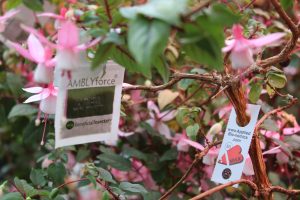
In recent decades, the Botany Greenhouse has utilized principles and strategies of Integrated Pest Management (IPM) to manage plant pests. In 2019, we transitioned to a more Biointensive IPM program, and have since worked to expand and refine our protocols.
IPM employs science-based strategies that emphasize pest prevention, pest identification, and systematic pest monitoring, ultimately informing customized actions to manage pests. Inclusive of biological, cultural, physical, and chemical pest control methods, IPM focuses on prevention and long-term management goals. The primary goal of an IPM program is to reduce pest populations while minimizing risks to human health and the environment through a reduction in the use of chemical controls and pesticides.
Biointensive IPM supplements foundational integrated management practices with an increased focus on pest ecology and biological controls- this is an excellent fit for our diverse permanent collection of plants, as well as plants grown for research or coursework.
Consistent monitoring and scouting throughout the greenhouses contribute to success of the program, allowing us to identify which pest species are present and how their levels are impacted by various control methods. Cumulative observations allow us to forecast pest activity that is correlated with seasonal changes. By identifying preferred host plants for each of our pest species we have become more efficient in our scouting and monitoring. As we gain experience and build on our knowledge of IPM, we have been able to able to act more proactively to effectively control pests.
Biological controls play a significant role in the success of our IPM program because of their potential to establish and contribute to long-term pest control. We have introduced many commercially available ‘natural enemy’ species to our greenhouse including parasitoid wasps; predatory insects and mites; and beneficial nematodes. Many of these introduced species have established permanently while others benefit from regular re-introductions. We have observed and identified two species of natural enemies, both native to our region, entering the greenhouse and becoming endemic; they are now included in our IPM strategy. Our ‘natural enemies’ often locate and suppress pest populations before they are noticed during scouting. Given time, they can provide enough control that a use of a chemical control can be avoided.
Since the program’s inception, we have significantly reduced the use of pesticides that are highly toxic to natural enemies, or have a notable persistence in the greenhouse environment. For quick pest suppression, we utilize horticultural soap or horticultural oil in a targeted application, often in tandem with a lower toxicity product that disrupts the pest’s life-cycle. We widely apply bio-insecticides that contain entomopathogenic fungi or bacteria and are often compatible with organic agriculture standards. Due to our infrequent use of certain pesticides, we don’t have any resistant populations of thrips or spider mites, a common issue seen in greenhouses; therefore, when we choose to use pesticides (in smaller targeted applications), they highly effective at achieving control. Finally, the reduction in our use of chemical controls and elimination of high-toxicity pesticides has resulted in a safer experience for the many students, researchers, and community members visiting the Botany Greenhouse.
Looking forward, we see many opportunities to refine our program as we gain more practical experience. We also recognize the importance of staying current on scientific literature and findings from educational institutions and industry partners; this is a rapidly growing area of research. We see a great potential to contribute to the success of other greenhouses and conservatories that are just starting their IPM journey by sharing our experiences on our website, through publications and conference proceedings, and networking within professional organizations such as the Association of Education and Research Greenhouse Curators (AERGC).
Finally, our unique position as a teaching greenhouse presents an opportunity to engage with students and visitors who are interested in learning more about IPM, in both formal and informal capacities. Many students engaged botanical sciences or other related disciplines have learned about IPM and biological controls through their coursework, but did not have an opportunity to gain practical experience or pursue the topics in-depth. We see potential to engage with some of these students by offering a framework for these educational pursuits, and to date have been able to host an IPM-related independent study project.
Challenges & Opportunities of Utilizing IPM in a Permanent Plant Collection
Longevity of the Collection – Unlike a production system where plants may be sold or seasonally discarded, our plants are with us for years and most likely decades. Plants with pest issues are here to stay and must be managed with a long-term strategy in mind. Pest populations that re-occur may be more likely to breed pesticide-resistant individuals over time, so special care must be taken to avoid overusing pesticides associated with causing resistance, and instead, rotate to chemical controls with different modes of action, or prioritize biological controls. Conversely, our plant collection’s longevity has been integral to establishing stable breeding populations of some natural enemy species including an aphid parasite (Aphidius colemani) and predatory beetle (Cryptolaemous montrouzieri), and has contributed to a longer than usual tenure of others without the need for re-introductions. Finally, caring for a permanent collection means that our greenhouses are never empty. Purposefully raising the temperature to an extreme, or ‘baking’ an empty greenhouse compartment between crops or projects is a widely utilized cultural control that can help reduce pest presence. Spraying all greenhouse walls, floors, and benches with a sanitizing solution can help reduce the prevalence of plant diseases. However, caring for a permanent collection means we will never have an empty compartment or be able to use these cultural control methods.
Plant Diversity in the Collection – Because of our plant diversity, we can’t always rely on traditional scouting methods used in production or research greenhouses – different plant species have different pest issues. While greenhouses with few species can perform thorough scouting by strategically checking a small selection of plants in each compartment, are faced with the prospect of checking dozens or hundreds of plants in order to get a true representation of pest presence. By identifying preferred host plants for each of our pest species we have become more efficient in our scouting and monitoring. On the contrary, our high level of plant diversity means that we are less likely to see rapidly occurring, large-scale outbreaks of a single pest.
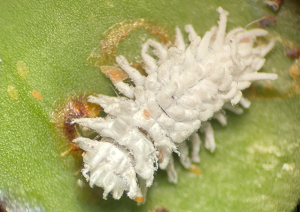
Tolerance and Acceptance of Pest and Natural Enemy Presence – Our reliance on biological controls for pest management means that our pest numbers will never be at zero. If our numbers fell to zero, it would mean that our greenhouse could not support natural enemy populations. When we observe a plant with pests, but also see adequate numbers of natural enemies, we typically watch and wait. Most of the time, we eventually see the natural enemy numbers increase and the pest numbers fall. However, a person viewing the collection on a specific day may only see a ‘snapshot’ in time and get a negative impression of the situation, rather than observe an improving trend. Next, the presence of natural enemies is frequently observable, but not commonly distinguished from pest presence by the average visitor. For example, the larvae of the Cryptolaemus beetle looks remarkably similar to its preferred prey, a mealybug, and are commonly noticed by observers. When the beetle larvae undergo metamorphosis to adulthood, they attach to a leaf or greenhouse surface and eventually leave behind the remnants of their cocoon, which can also look like a mealybug. This will persist until the leaf falls, the plant is trimmed, or the pot is washed. Another example is our two aphid parasitoids, Aphidius spp.; these wasps leave parasitized aphid exteriors (i.e., aphid ‘mummies’) behind on plants, which can look like a pest outbreak to the untrained eye.
Incoming Plant Material – In addition to our permanent collection and plants produced for coursework, we care for faculty research collections and student projects. As is common in botanical research, we regularly receive requests to introduce plants into the greenhouse that have been collected from outdoors or that have spent time in another greenhouse facility. Our policy is to inspect, quarantine, and sometimes apply pesticides to these incoming plants, but it is still possible to introduce a new pest this way.
Garden & Greenhouse Work – Our team cares for the Botany Garden in addition to the Greenhouse, and we are often working in both garden and greenhouse spaces on the same day. This increases our risk of introducing pests into the greenhouse. Additionally, we bring some plant material from the garden into the greenhouse for overwintering, namely aquatic plants that live in the Botany Garden pond during the summer. Bringing plants into a greenhouse from outside could result in the introduction of a new pest species. However, in our case, this introduction of plant material from outside may have contributed to the introduction of our two ‘Wisconsin native’ natural enemies, Encyrtus aurantii and Anystis baccarum.
Visitors, Workers and Small Spaces – We welcome visitors from both the university community and public, and regularly accommodate undergraduate class visits. It is common for people moving through the greenhouse to have brief contact with some plants as they navigate the narrow aisles; therefore, it is possible for pests to be moved on a visitor to a new plant or greenhouse compartment. Similarly, our team members often perform watering or plant maintenance in multiple greenhouse areas during a single shift and can potentially move pests.
Classroom Plant Deliveries – In line with the primary function of our collection, to support undergraduate instruction, plants from all areas of the greenhouse are delivered to laboratory classrooms throughout the building. This results in an inevitable co-mingling of both plants and pests, making it easier for a pest to move to a new plant and be introduced into a new area of the collection.
Older Infrastructure – Our greenhouse has many areas with soil floors, and also areas where cracks have formed in the floors or walls, or a piece of glass or screen that’s not a tight fit. These spaces can promote the persistence of pests or allow pests to enter from outside; modern greenhouses are built to avoid these issues. Additionally, our large plant collection fills our space to the brim and plants are often growing close together. It can be more difficult to identify and control pests in settings with these conditions.
Time & Resource Management – In general, implementing targeted cultural, mechanical, and biological controls as part of an IPM program is more time consuming than simply relying on broad spectrum applications of chemical controls, or pesticides. Similarly, transitioning our long-established IPM program to utilize more biological controls has required more time from staff, and additional expenses. While we have reduced our overall pesticide use and the amount we are spending on chemical controls, expanding our biological control program has required a significant financial investment; biological controls that do not establish must be routinely re-introduced.
Opportunities for Students to Learn about IPM – As IPM becomes more common and widely utilized in greenhouses and agricultural systems, universities have included it in their curricula within horticulture, botany, and entomology courses. Since the implementation of our program, we have appreciated a high level of student interest, and to date have had the capacity to host an independent study student over one semester. Looking ahead, we realize a great potential for students to engage with our IPM program through research or independent study.
Pests and Natural Enemies in the Botany Greenhouse:
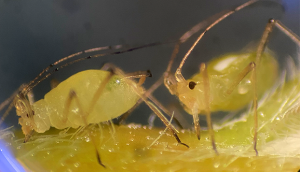
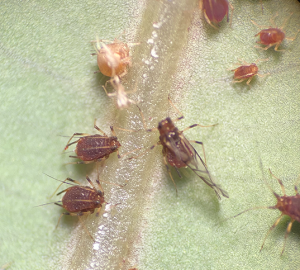
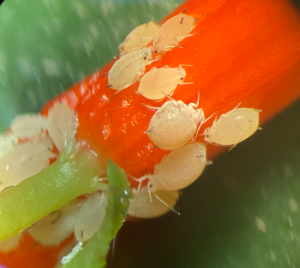
Aphids Present in our Greenhouse:
- Cotton/Melon Aphid – Aphis gossypii
- Foxglove Aphid – Aulacorthum solani
- Banana Aphid – Pentalonia nigronervosa
Our Biological Control Experience:
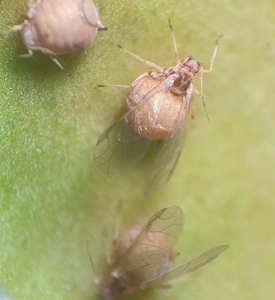
- Aphidius colemani, aphid parasite
A. colemani is a small, parasitic, braconid wasp that is highly available commercially. This species of wasp parasitizes a range of aphid species, with the cotton/melon aphid (Aphis gossypii) being the pest species most commonly targeted in greenhouse systems. This species was introduced into the collection in 2019 and has become established, requiring no new introductions. Over A. colemani’s 4-5 day life cycle, they can lay an average of 380 eggs! (Mahr)
- Aphidius ervi, aphid parasite
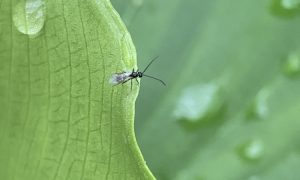
This wasp parasitizes a variety of aphid species, especially larger aphids in comparison to A. colemani, which prefers smaller aphids. This wasp can lay up to 50 eggs a day over their 5-7 day lifespan (mahr). We use them to target foxglove aphid populations in the greenhouses. We find that they haven’t established as well as A. colemani, but occasionally find their mummies outside of release times.
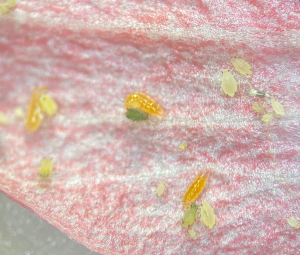
- Aphidoletes aphidmyza, aphid midge/ predator
The larvae of the aphid midge feed on over 60 aphid species! They feed by injecting a toxin into the aphids’ leg to paralyze them, and then suck out the body contents of the aphid through the abdomen (Mahr). Larvae can kill anywhere from 4 to 65 aphids a day. We haven’t seen long-term establishment or success in control compared with parasitoid wasps. This is likely because the lifecycle of the midge requires the larvae to drop into soil to pupate, and most of our collection is in pots. This would be a great control option in a large soil bed or conservatory setting. For us, they work well against hotspot outbreaks, but did not provide long-term control.
Mites Present in the Greenhouse:
Two-Spotted Spider Mite – Tetranychus urticue
Our Biological Control Experience:
Phytoseiulus persimilis, spider mite predator
This species is known to be one of the most voracious and effective mite predators that target the two-spotted spider mite. The optimum temperature range for their development is 70-80º F (Mahr); notably, they do not survive our high greenhouse temperatures that occur in the summer months. Because of this limitation, we only use them in greenhouses from Sept-April/May. Adult mites are orange and pear shaped, and complete a full reproductive life cycle in approximately 50 days (UC, Mahr).
Neoseiulus (Amblyseius) californicus, spider mite predator
This mite predator is similar to P. persimilis, however, they are known to tolerate higher temperatures and lower humidity levels. We release them in May-September when our greenhouse temperatures rise. This predator does not suppress populations as quickly, but is useful because they tolerate lower spider mite densities by feeding on pollen and other small arthropods. (mahr)
Neoseiulus fallacis, spider mite predator
We find that they are not as aggressive as P. persimilis, and not available as often. They are good for warm and moderately humid environments, but also can tolerate lower humidity and higher temperatures. They are said to be voracious consumers of mites and will leave original host plant in search of other food sources once populations have been suppressed. (Cornell)
Galendromus occidentalis, spider mite predator
These mites perform well on pubescent leaves. We find that they tolerate very hot and dry conditions, as well as low pest density. They are said to develop best at cooler temperatures, and in a wide range of humidity levels (40-80% RH) (mahr). They are the slowest predatory mite available. We order them occasionally for release in our Salvia collection.
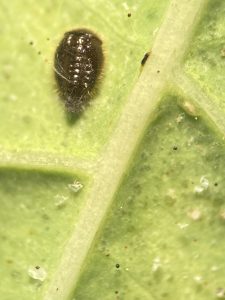
Stethorus punctillum, spider mite destroyer
They are mainly released as an adult beetle, and both the beetle and its larvae consume spider mites in all stages (Mahr). Due to cost, availability, and lack of establishment, we release them occasionally (1-2x year).
Feltiella acarisuga, spider mite destroyer
This mite predator is a tiny gall midge that feeds on spider mites in all stages; generally the midge prefers eggs or larvae (Mahr). Adult gall midges are small, delicate flies. We use them in tandem with predatory mites for severe infestations. Because adults can fly, they work well in our taller tree canopies. We find that they also work well with plants that have pubescent stems. Due to expense, we release them 1x/year in October, as they do not tolerate our summer heat or low humidity.
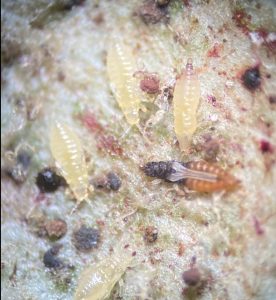
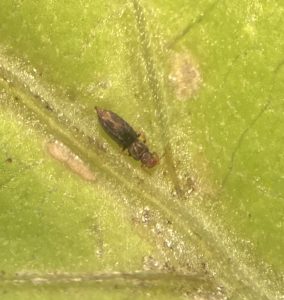
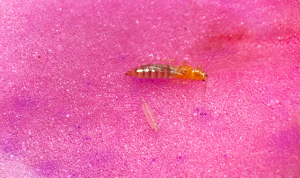
Thrips Present in our Greenhouse:
- Western Flower Thrips – Frankliniella occidentalis
- Greenhouse Thrips – Heliothrips haemorrhoidalis
- Impatiens Thrips/Poinsettia Thrips – Echinothrips americana
Our Beneficial Insect Experience:
- Neoseiulus (Amblyseius) cucumeris, thrips predatory mite
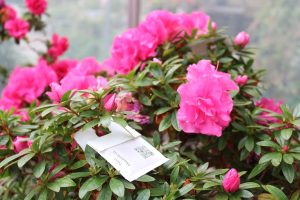
This predatory mite feeds on young thrips. Although they prefer young thrips, they can feed on spider mites, spider mite eggs, and pollen if thrips aren’t available (Mahr). We have found that they are successful at suppressing thrips populations, but not curative. These mites are released via hooked sachet packets containing various life stages of mites that will emerge from the sachet at maturity, through a small opening; mites emerge over a 6 week time period. We hang 500 sachets on plants throughout the collection, and replace them every 6 weeks. We occasionally order this mite in a different format, a loose bran material that is sprinkled over thrips hotspots, or used in projects where hanging sachets is impractical.
- Stratiolaelaps scimitus (Hypoaspis miles), predator
This is a soil-dwelling mite that feeds on a variety of soil-inhabiting arthropods, including thrips pupae in soil (Mahr). This mite is readily available commercially, and is commonly used against fungus gnat larvae as well other small, soil-dwelling insects. We order 12,500 with every beneficial insect order to release into new plantings or hotspots. Additionally, we release them into them to each container and the soil floors in the greenhouse.
- Steinernema feltiae, beneficial nematode
This is a beneficial nematode species that helps control fungus gnats and thrips in soil. The nematode enters the insect through the hosts body openings and paralyzes them (Uconn, Mahr). They can be applied in water or in a media such as vermiculite. We use a hose injector system to apply them to containers and soil floors across the greenhouses. We order enough to apply them in all greenhouses and containers for release in October/November. We order them occasionally outside of this time to add them to research projects, new plantings, and highly preferred plants.
- Dalotia coriaria, rove beetle
This rove beetle is a generalist predator that targets a wide variety of small arthropods, but is primarily an egg predator (Biobee). They are commonly used for control of fungus gnats and thrips during their soil-dwelling life stages. Adults can consume 10-20 prey/day and are used year round (Biobee). They reproduce easily, and we do a large release of them in October—assuming our extreme summer temperatures cause their population to decline.
Mealybugs Present in our Greenhouse:
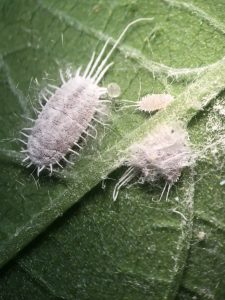
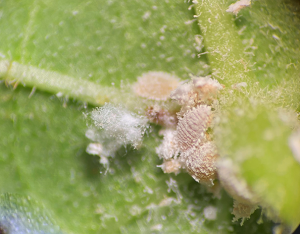
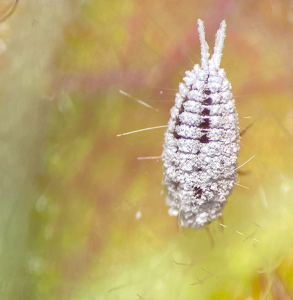
- Citrus Mealybug – Planococcus citri
- Long-Tailed Mealybug – Pseudococcus longispinus
- Striped Mealybug – Ferrisia virgata
Our Beneficial Insect Experience:
Cryptolaemus montrouzieri, mealy bug destroyer
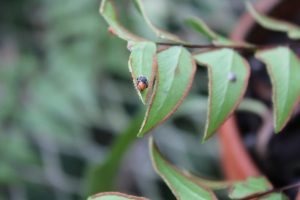
This beetle is a small, dark brown beetle that is a voracious predator to different types of mealybugs. Both the larvae and the adult beetle feed on all life stages of the mealybug (Mahr). Adults can fly and will often take flight in search of a food source once mealybug populations have diminished in a given area (Cornell). The larvae mimic an adult mealybug. These beetles are commercially available but have been established in the Botany greenhouse for over a decade, at least. They reproduce best in Citrus mealybug egg masses. The adult beetles are generalist predators, and have been seen eating aphids, scale, spider mites, and of course, all types of mealybugs. The larvae seem more mealy bug focused but have been observed near scale outbreaks. They perform well in warm humid environments, but we have them across our entire facility.
Scale Present in our Greenhouse:
- Brown Soft Scale – Coccus hesperidum
- Hemispherical Scale – Saissetia coffeae
- Boisduval Scale – Diaspis boisduvalii
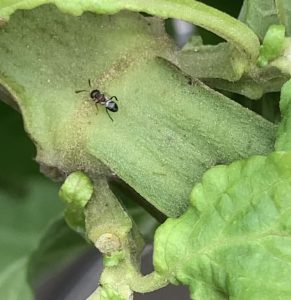
- Encyrtus aurantii, scale parasite
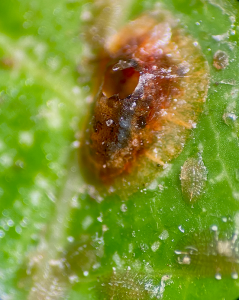
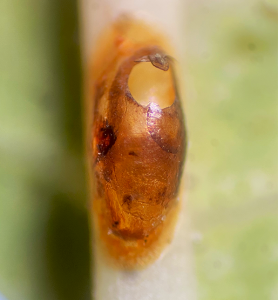
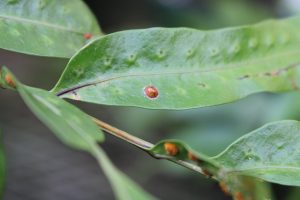
This is a WI native that introduced itself into our greenhouse and found enough of a tropical scale population to become established year-round. It has been observed in all greenhouse compartments, and near more than one type of scale insect. Even though it is a WI native, it can parasitize/reproduce on tropical scale insects. Parasitized scales look dark black in the center, and scales with a small round hole on the top are where this wasp has already hatched. They are not commercially available as a biological control.
- Lindorus lopanthae, purple scale predator
This scale predator eats both soft and hard scale insects. Both adults and larvae consume scale at all life stages (Mahr). This insect is commercially available and was released two times in 2020-21, but not since then because of costs. However, they have been observed as recently as February 2024, most often on Boisduval scale in our orchid greenhouse. They are small, and not widespread, so we do not see them often.
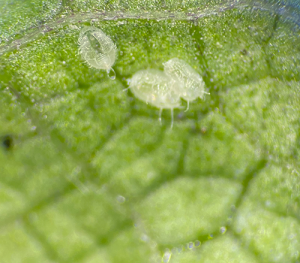
Whitefly Presence in our Greenhouse:
Greenhouse Whitefly – Trialeurodes vaporaroirum
Our Beneficial Insect Experience:
- Delphastus catalinae, sweet potato whitefly predator
The adult beetle will feed on all stages of whitefly, including adults. It does feed on greenhouse whitefly even though it’s named sweet potato whitefly predator. We order these beetles occasionally, only if it seems have an unusually high number of adult whitefly. We don’t have high enough numbers of whitefly to sustain this beetle to reproduction and haven’t seen it around after initial releases.
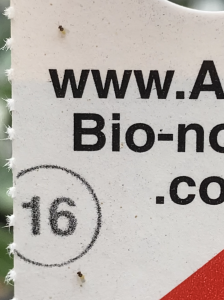
- Encarsia formosa, greenhouse whitefly parasite
The adult wasp is very small (0.6 mm), and they primarily reproduce asexually; the male wasp is very uncommon (mahr). Females parasitize pupae and nymphs of the greenhouse whitefly. That being said, these wasps can not provide control of the whitefly adult stages. They are widely available commercially, and we hang 10-20 cards (100 eggs each) around the areas where whitefly sometimes occur. This is an inexpensive product that we include with each biological control order.
Fungus Gnat Present in our Greenhouse:
Fungus gnat – Bradysia impatiens
Our Beneficial Insect Experience:
- Stratiolaelaps scimitus (Hypoaspis miles), predator
This soil dwelling mite controls fungus gnat larvae. It is an aggressive predator, and adults can consume 1-5 larvae a day (Mahr). We order 12,500 with every order to release them into new plantings or hotspots. We also place a large order in October, to add them to each container and the soil floor in the greenhouses.
- Steinernema feltiae, beneficial nematode
This is a beneficial nematode species that helps control fungus gnats and thrips in soil. The nematode enters the insect through the hosts body openings and paralyzes them (Uconn, Mahr). They can be applied in water or as a granular component in media. We use a hose injector system to apply them to containers and soil floors across the greenhouses. We order enough to apply them in all greenhouses and containers for release in October/November. We order them occasionally outside of this time to add them to research projects, new plantings, and highly preferred plants.
- Dalotia coriaria, rove beetle
This rove beetle is a generalist predator that targets a wide variety of small arthropods, but is primarily an egg predator (Biobee). They are commonly used for control of fungus gnats and thrips during their soil-dwelling life stages. Adults can consume 10-20 prey/day and can be used year round (Biobee). They reproduce easily, and we do a large release of them in October—assuming our extreme summer temperatures cause their population to decline.
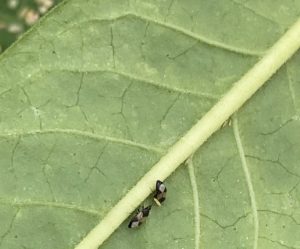
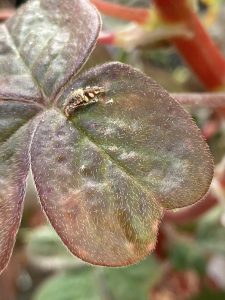
- Orius insidiosus, minute pirate bug
All stages of this predator consume small insect pests, and are generalist predators against aphids, thrips, whiteflies, and spider mites (Mahr). They are released as adults. They have the ability to establish but are seen infrequently in our greenhouses outside of release time-frames. They could potentially feed on our other natural enemies. We order them occasionally during peak thrips periods, or for research projects. Orius are also native to WI, and have been seen on Hibiscus flowers in the Botany Garden, attacking thrips.
- Chrysoperla rufilabris, green lacewings
This species of green lacewing is commercially available for control of soft-bodied pests (Mahr). They are available in eggs or larvae form, but we usually release just the larvae. These are generalist predators, but especially prefer to eat aphids. They are less likely to feed on other natural enemies than Orius. We release them in aphid hot spots. We use them to help control aphid populations when we don’t want to spray an area because we are trying to get an aphid parasitoid population established. We order these fairly regularly because they are a generalist predator and relatively inexpensive.
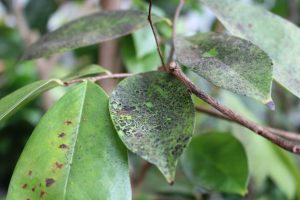
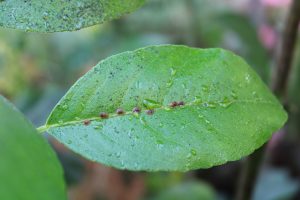
Aphids and scale insects excrete a sticky substance called “honeydew”. Honeydew accumulates on leaf surfaces, making the leaf appear sticky, wet, and shiny. This honeydew promotes the growth of sooty mold, which is a fungal disease that grows on leaf surfaces covered in the honeydew substance (UConn). The mold doesn’t infect the plants, but rather grows on the surface of leaves thus blocking the amount light received by the plant for photosynthesis. It is an aesthetic issue, and its presence is an indication of a sucking insect population close by. Management for the mold involves leaf cleaning and pruning.
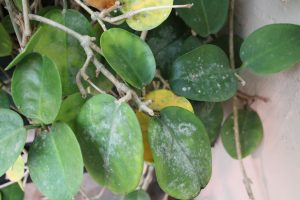
Powdery mildew is a fungal pest pathogen caused by several species of fungi, each with a limited host range. The pathogen grows on leaves, stems, and flower surfaces of its host. It is characterized by white, powdery mats that are aesthetically displeasing. As the fungi grows, it develops structures able to insert itself into the plant and extract nutrients from its host. (Clemson) The pathogen is mainly a cosmetic, non-lethal issue, however extreme cases can cause severe leaf loss and a general decline of plant health. (UW-Ex) Our management of the pathogen involves the use of M-Pede or SuffOil X, which have been highly effective.
Pest Damage
What to look for
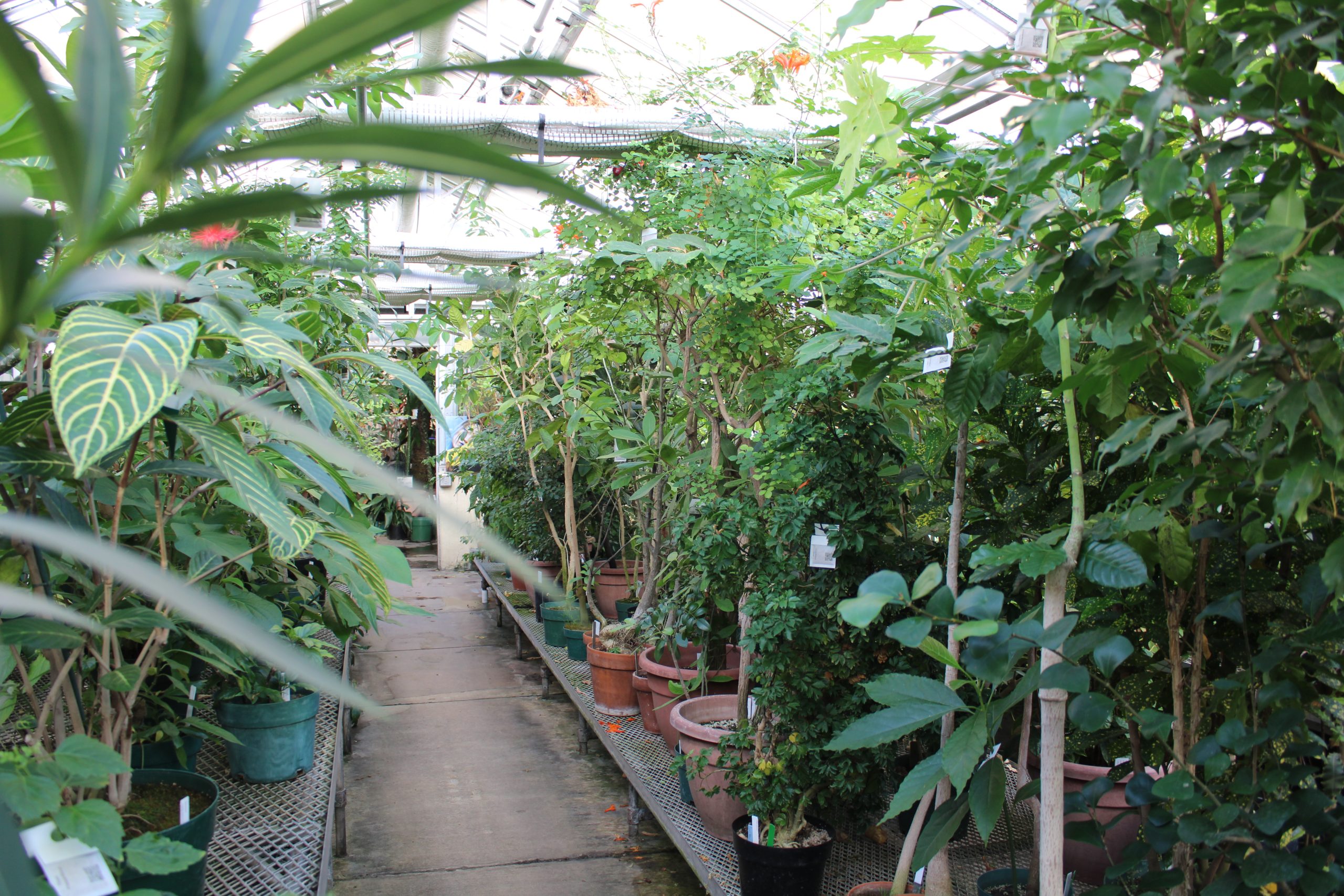
Across 8,000 sq. ft of grow space, scouting for millimeter sized insects can be a challenge. Therefore, it’s common to see signs of damage before the actual pest. Knowing what to look for provides visual cues and can indicate pest presence.
Aphid Damage
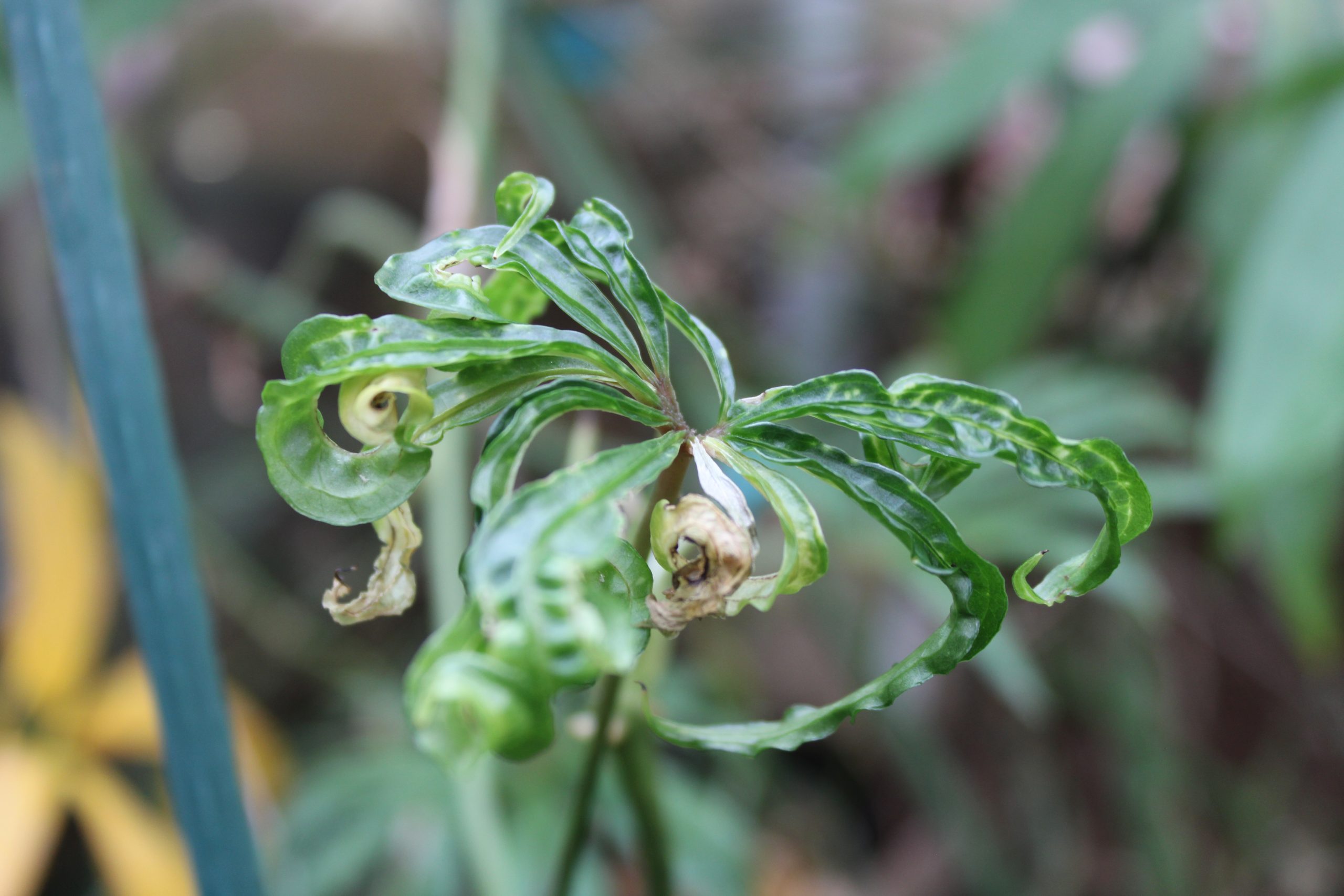
Aphid damage is not uniform. Damage can be leaf curling, stunted growth, leaf discoloration, and yellowing. Molted aphid skins are often seen before the insect itself.
Spider Mite Damage
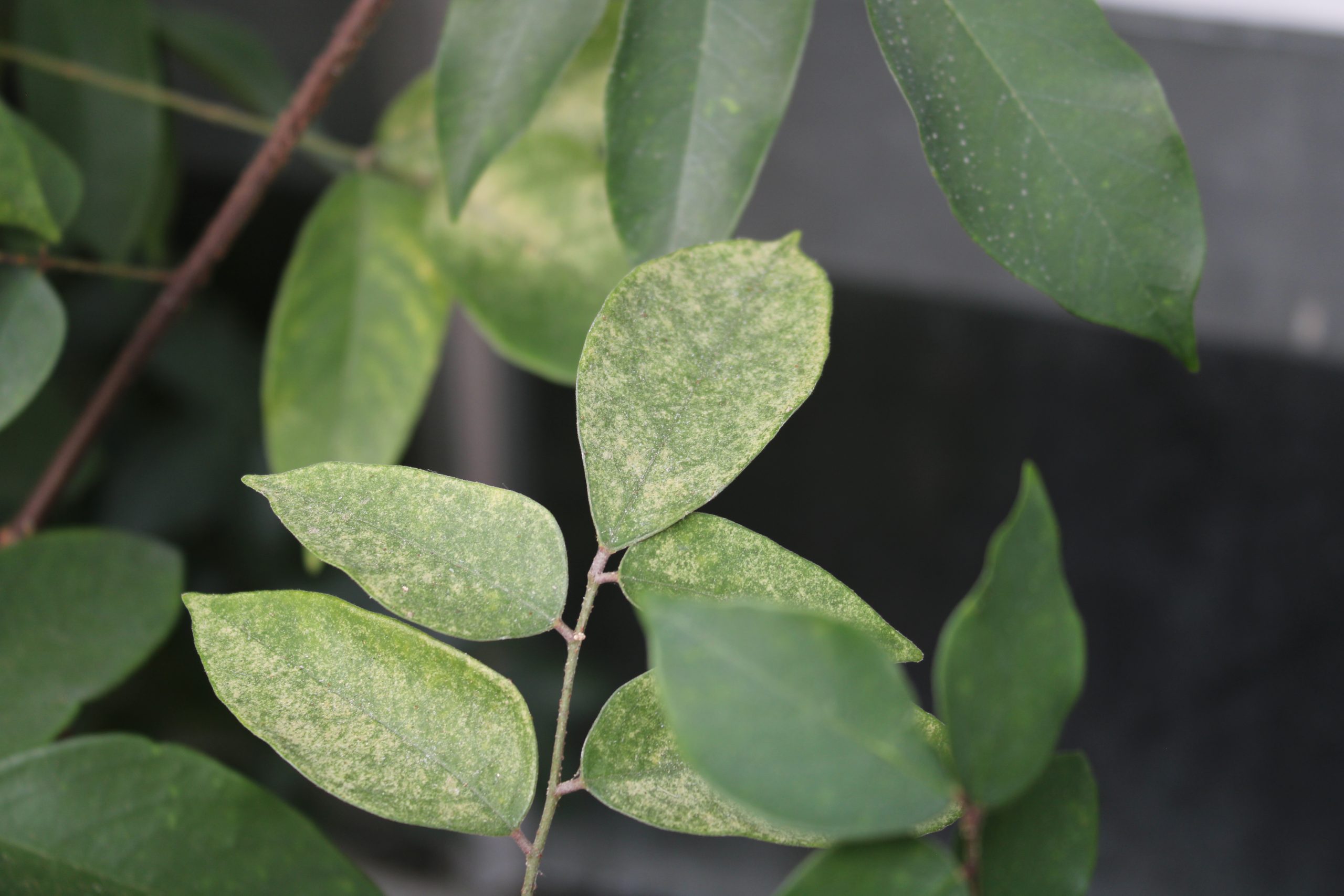
By piercing into and sucking plant sap to feed, this injury causes white or yellow speckling on leaves. Severe infestations are also characterized by webbing around leaves and stems.
Thrips Damage
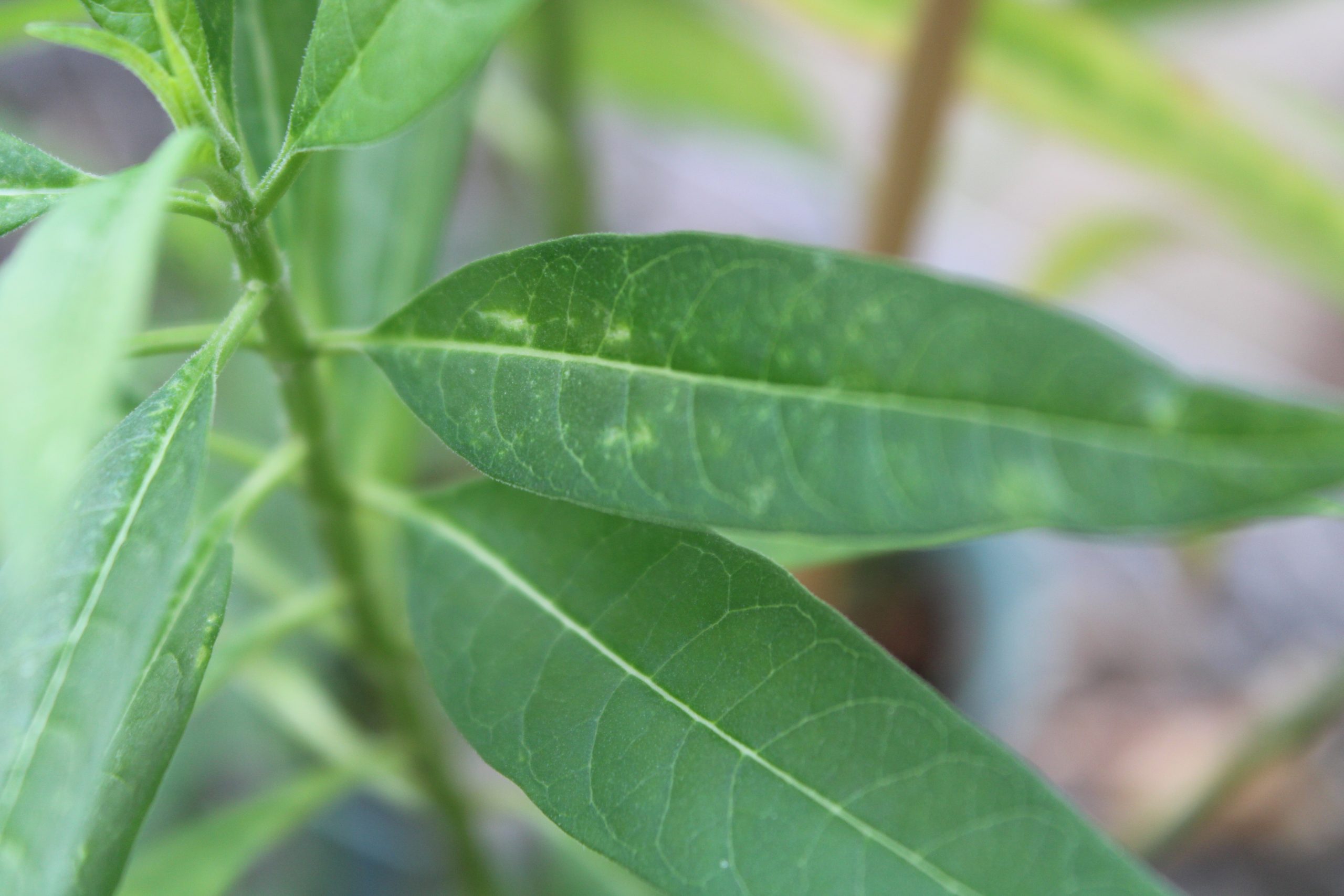
Damage is characterized by silverly speckling, streaks, or white patches on leaves. This is because thrips are puncturing plant cells and feeding on their contents.
Mealybug Damage
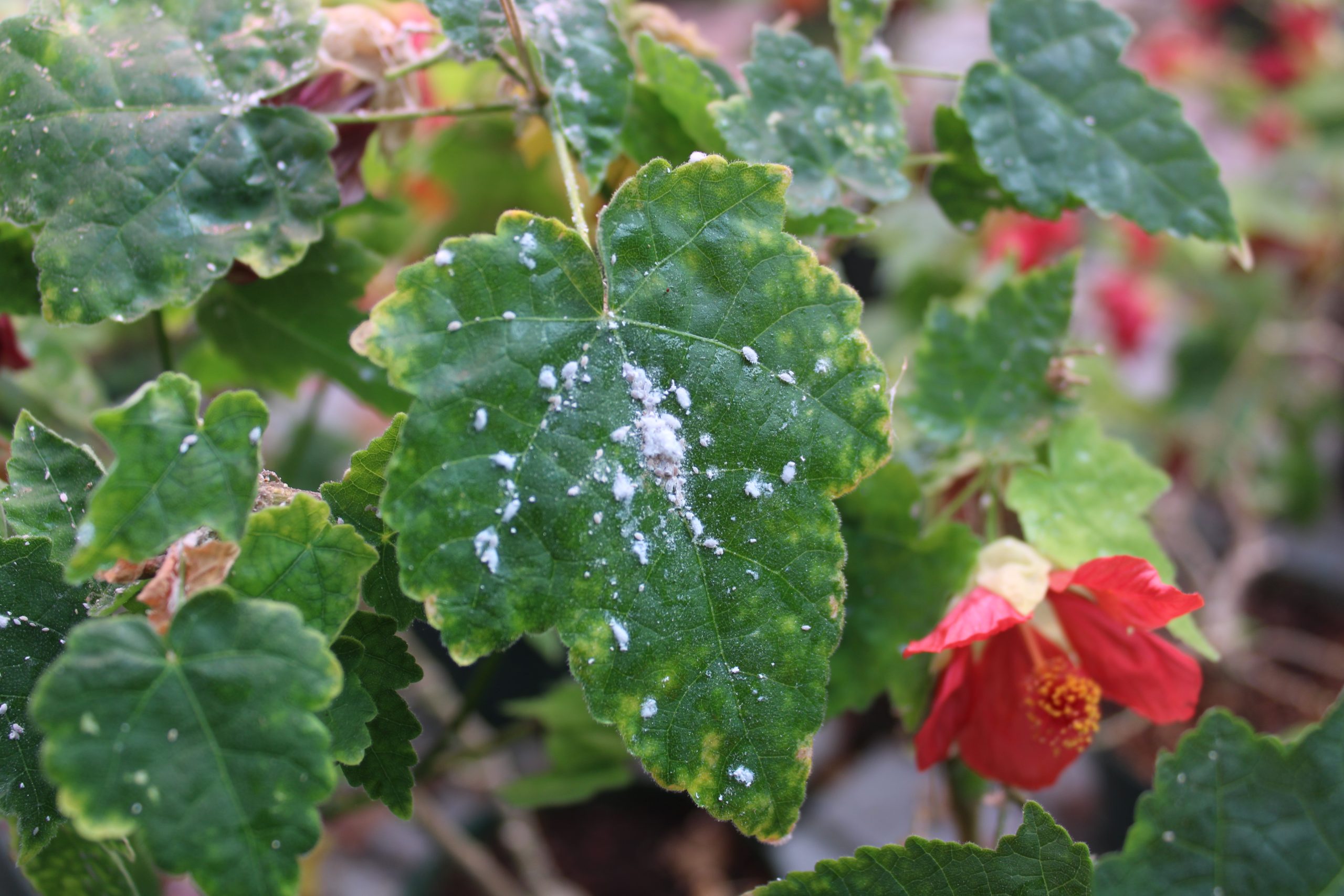
Mealybugs are sap sucking insects; feeding results in yellowing leaves, stunted growth, and leaf curling. They are larger than other pests and adults are easily noticed during scouting.
Scale Damage
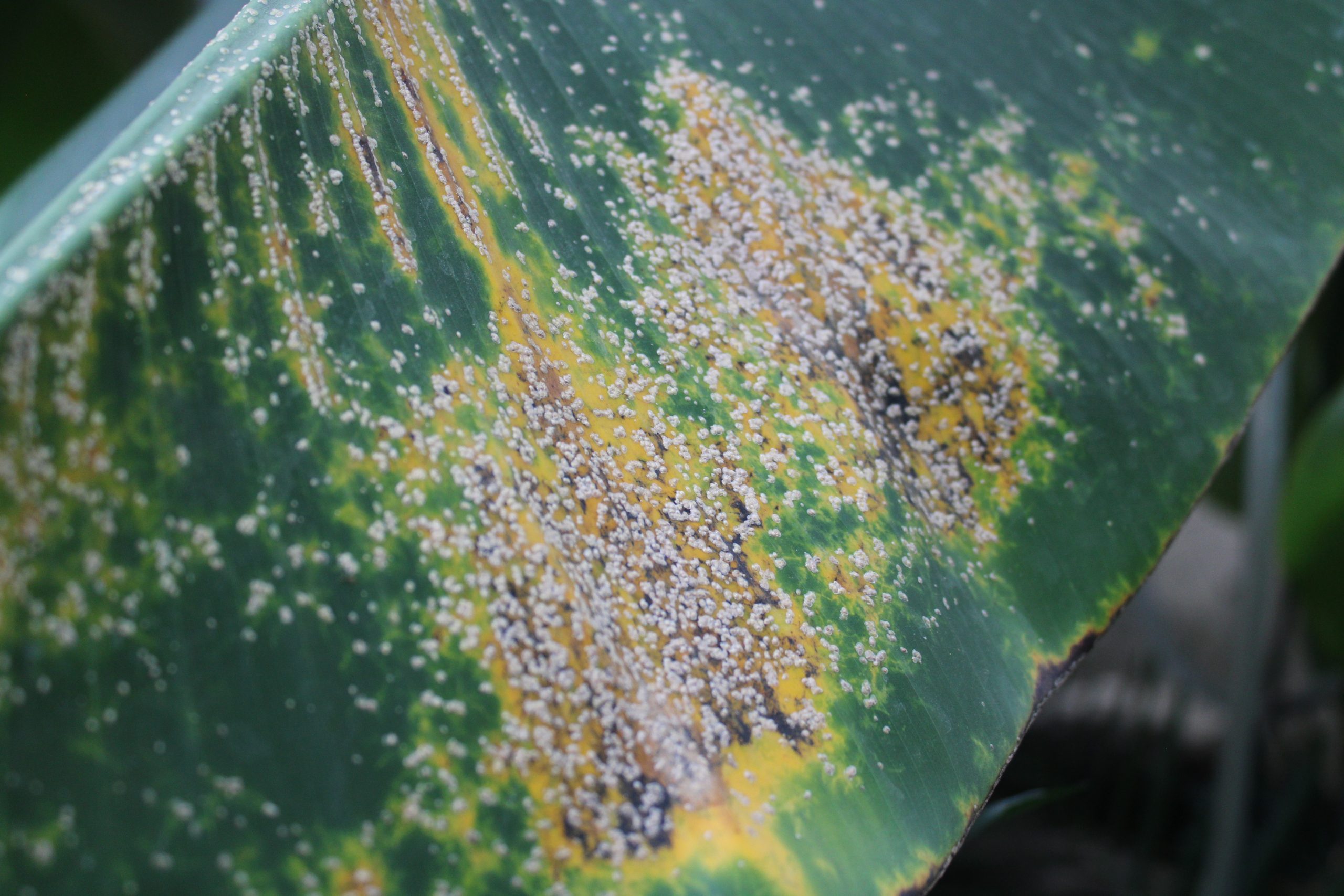
Adults are large enough to be seen without a lens, however, juveniles or crawlers are extremely small. Symptoms of damage include yellowing, honeydew accumulation, and decreased plant vigor.
Control Methods in IPM
The suppression of an organism using another living organism (15)- a natural enemy. Natural enemies can be predators, parasitoids, or entomopathogens. Many biological control programs employ all three types of enemies in tandem.
What is a predator? A predator is an organism that kills and feeds on its prey. Its lifecycle occurs outside of and independently of its prey.
What is a parasitoid? A parasitoid is an organism that kills its prey by depositing an egg into its host. When the egg hatches, the larvae then consume the host from within as they mature and complete their life cycle. Once the cycle is complete, an adult parasitoid emerges from its prey. The leftover body of the prey is sometimes referred to as a “mummy”.
What is an entomopathogen? An entomopathogen is a naturally occurring pathogen (fungus, bacteria or virus) that disables or kills an insect.
A proactive control strategy that alters pest proliferation. This includes obtaining disease-resistant cultivars, performing appropriate sanitation standards, correctly spacing plants to prevent the spread of insects and disease, and manipulating the environment to be less favorable for pests’ reproduction.
Also known as mechanical control — control efforts that use any physical measures to remove pest-ridden material; trapping, hand cleaning, removal of dead, infected and/or decaying plant material.
The use of synthetic or biologically derived compounds to eliminate or strongly reduce pest populations. Synthetic pesticides are man-made chemicals often powerful and fast acting. Biologically derived compounds consist of naturally occurring compounds, or microorganisms.
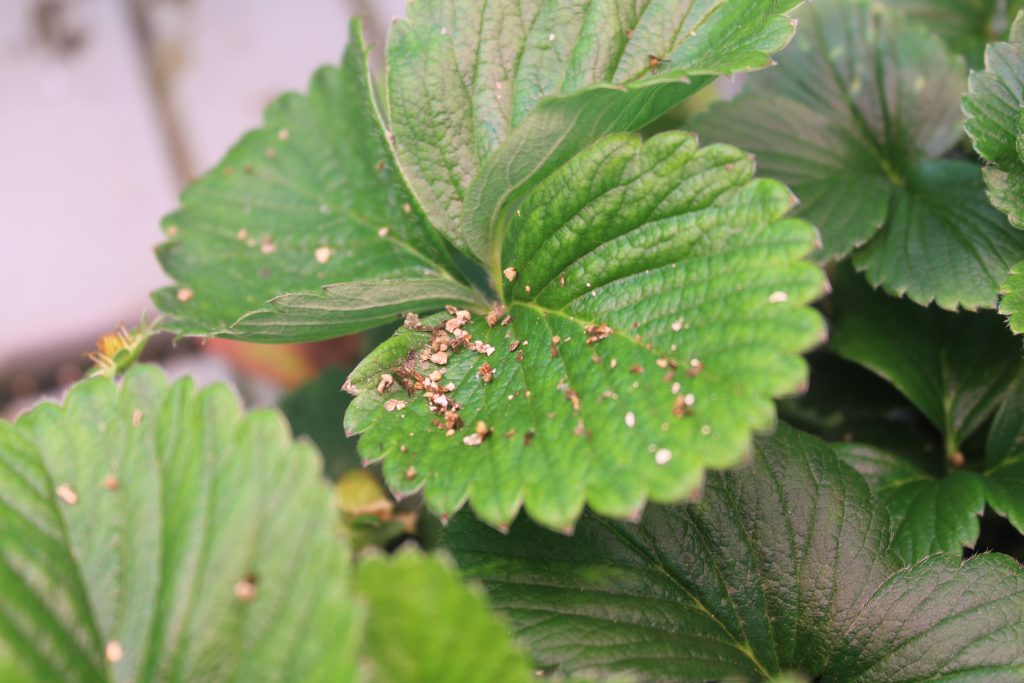
Phytoseiulus persimilis predatory mites in vermiculite, released on strawberry showing spider mite damage. (Photo by Dahlia Susel)
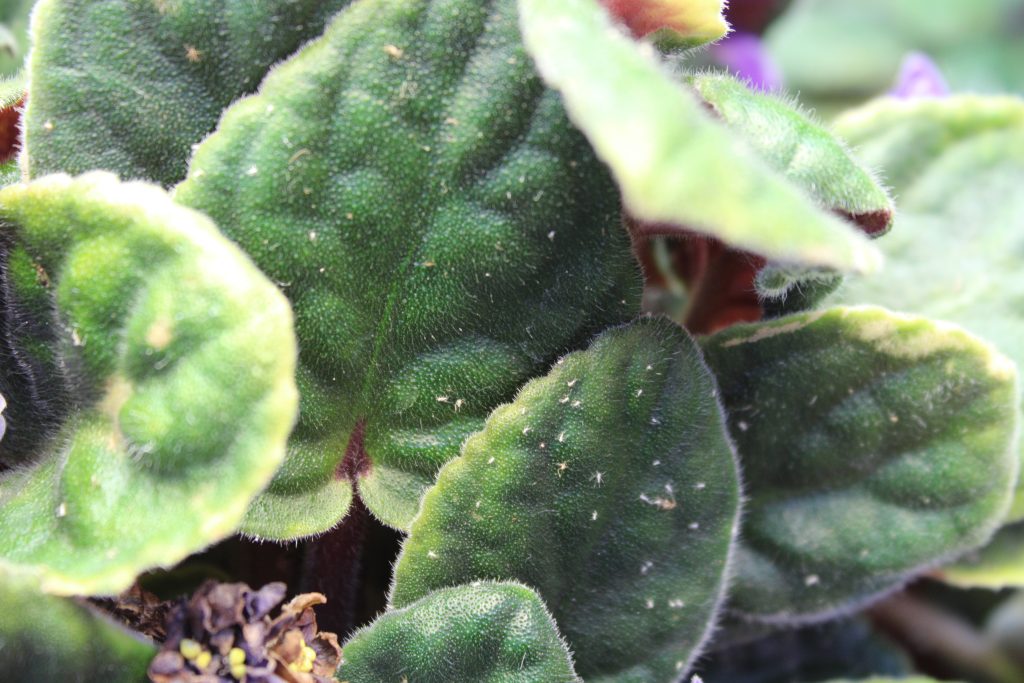
Molted aphid skins on African violet. (Photo by Dahlia Susel)
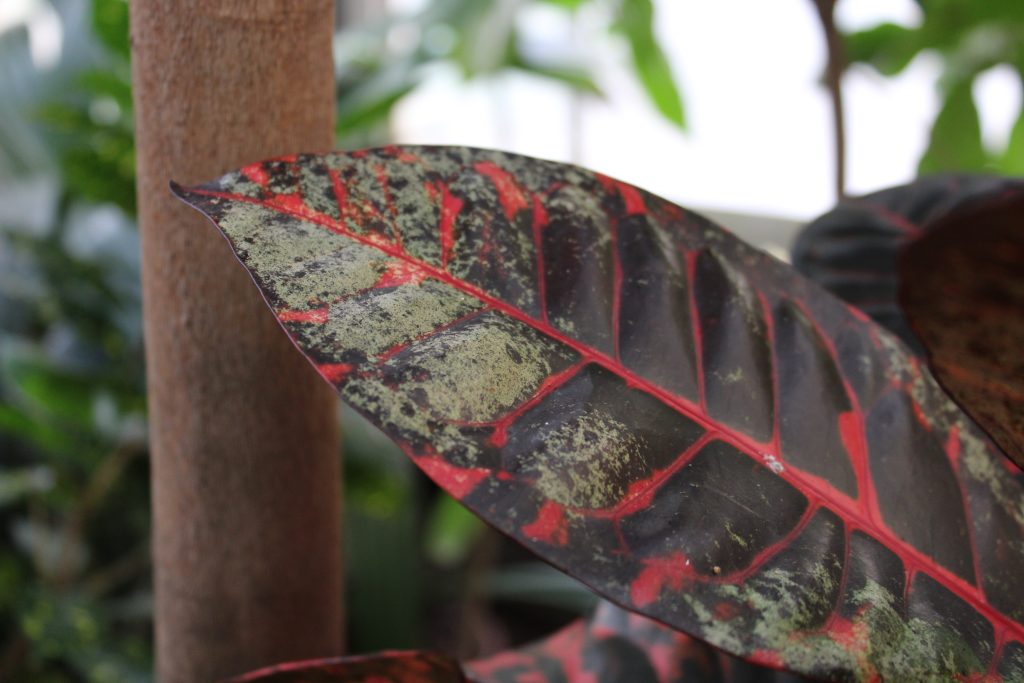
Foliar thrips damage on Croton. (Photo by Dahlia Susel)
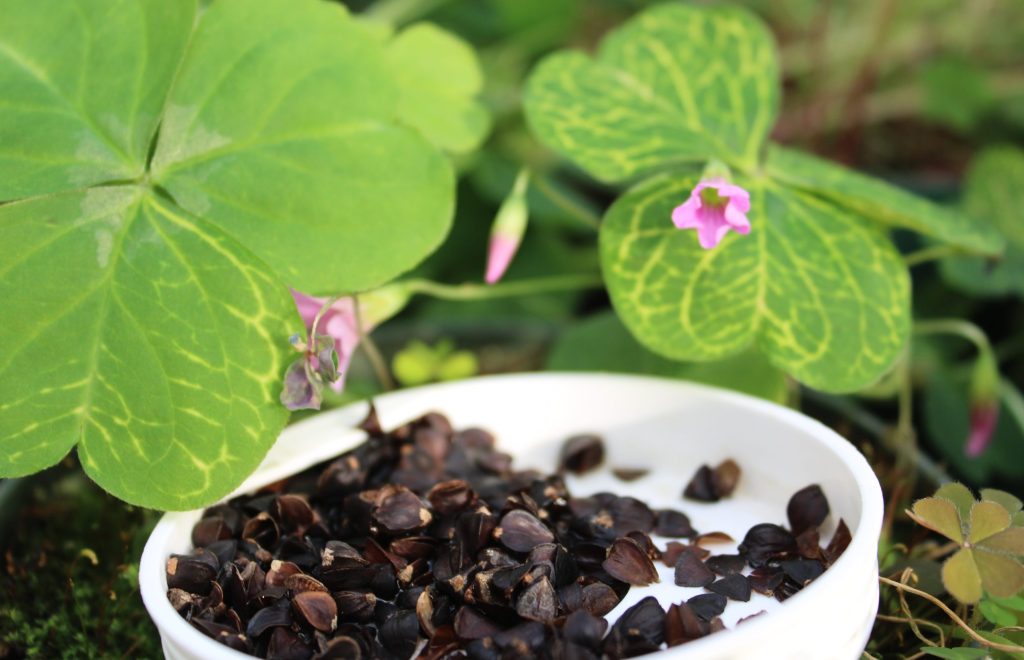
Buckwheat hulls material with lacewing larvae, released in the Oxalis collection. (Photo by Dahlia Susel)
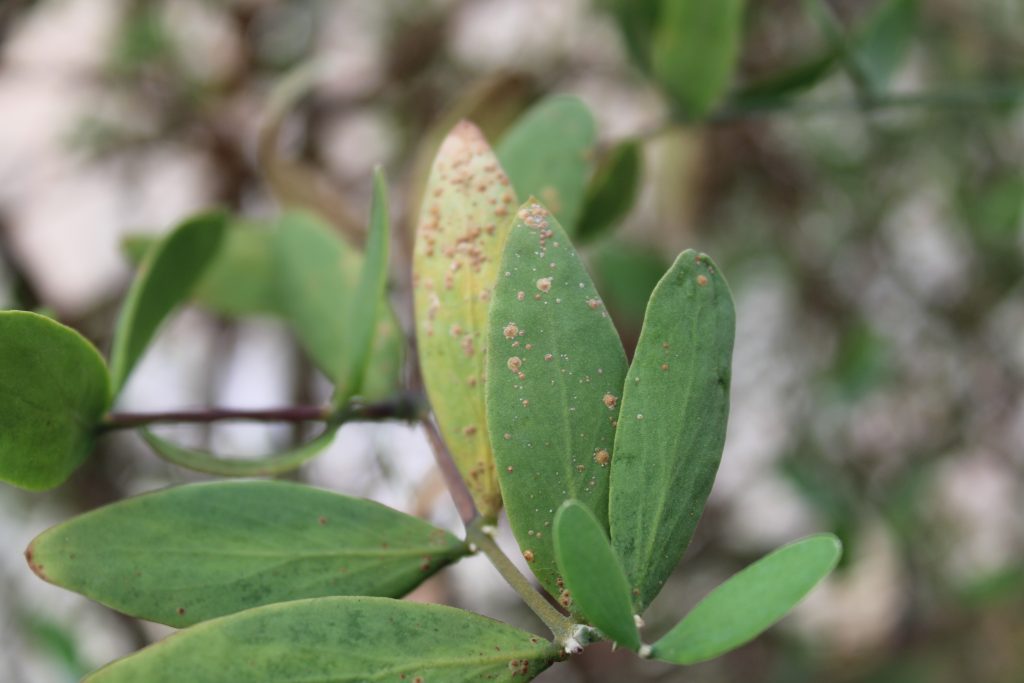
Soft scale on leaves of Simmonsia chinensis. (Photo by Dahlia Susel)
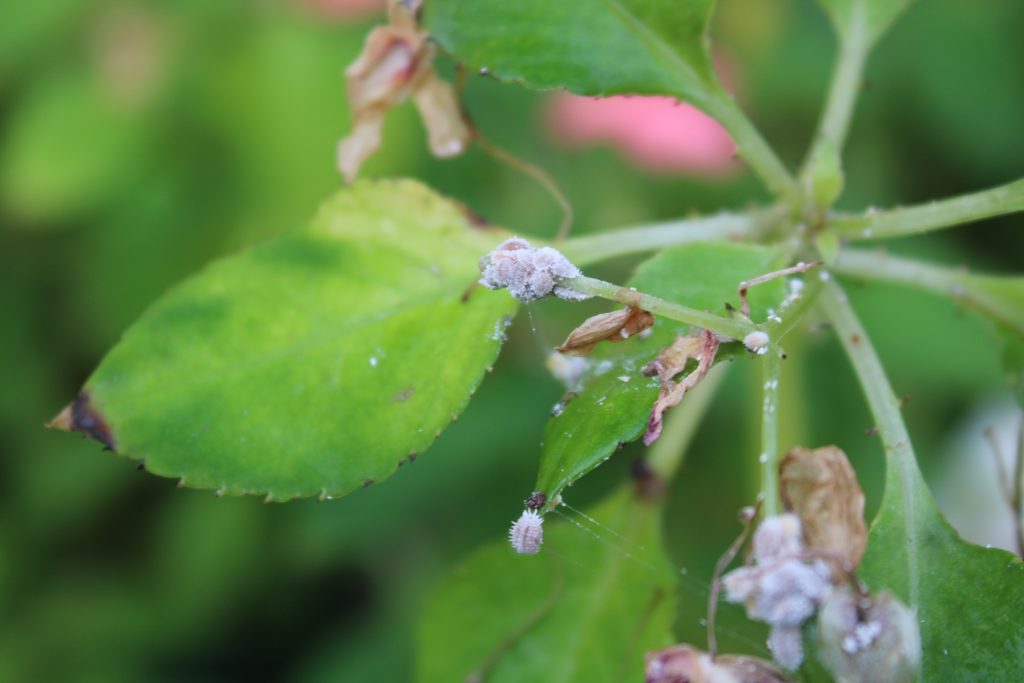
Citrus mealybug damage and insects. (Photo by Dahlia Susel)
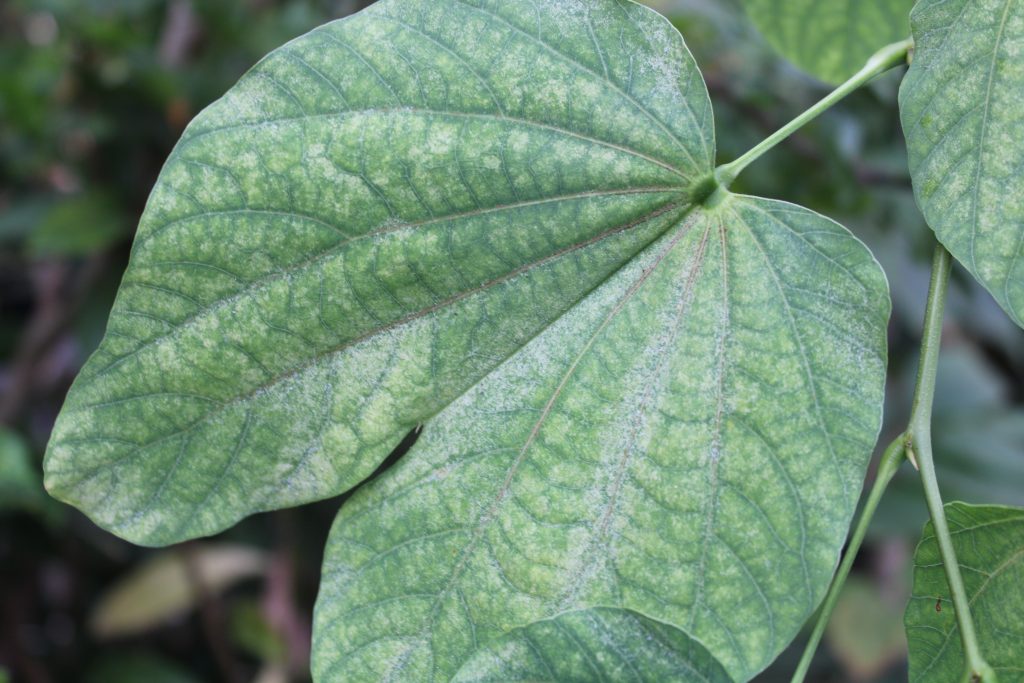
Bauhinia leaf with typical spider mite damage. (Photo by Dahlia Susel)
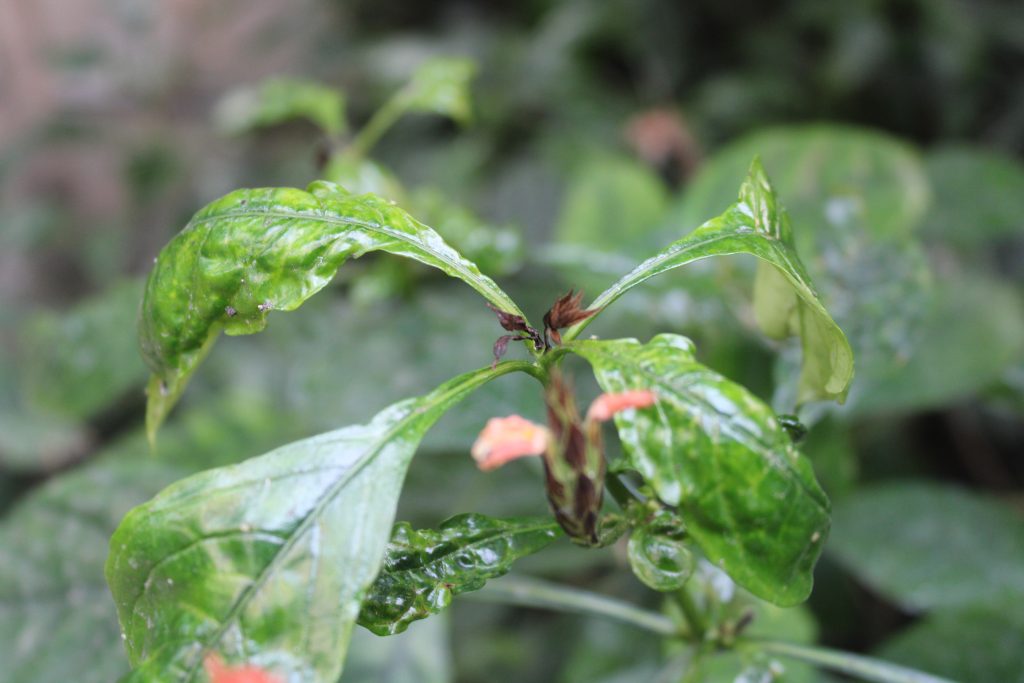
Aphid damage on Crossandra infundibuliformis. (Photo by Dahlia Susel)
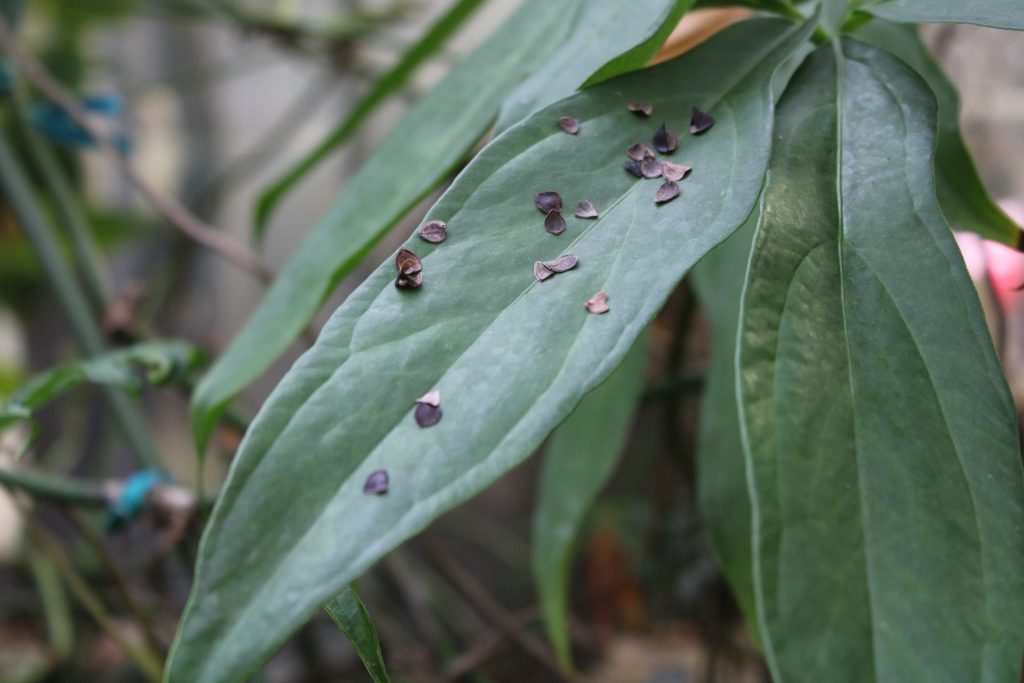
Carrier medium of buckwheat hulls containing lacewing larvae released on leaves. (Photo by Dahlia Susel)
- “Biointensive Integrated Pest Management (IPM) ~ PDF.” https://attra.ncat.org/wp-content/uploads/2022/10/ipm.pdf
- Four Critical Steps to Implementing a Biological Control Program, https://www.canr.msu.edu/news/four_critical_steps_to_implementing_a_biological_control_program
- “Integrated Pest Management in the Academic Small Greenhouse Setting: A Case Study Using Solanum Spp. (Solanaceae).” https://www.ncbi.nlm.nih.gov/pmc/articles/PMC6711345/
- Integrated Pest Management (IPM) Principles, https://www.epa.gov/safepestcontrol/integrated-pest-management-ipm-principles
- “IPM Scouting and Decision Making.” https://ag.umass.edu/greenhouse-floriculture/fact-sheets/ipm-scouting-decision-making
- “IPM in the Greenhouse Series: Integrated Pest Management in Commercial Greenhouses: An Overview of Principles and Practices – Oklahoma State University.” https://extension.okstate.edu/fact-sheets/ipm-in-the-greenhouse-series-integrated-pest-management-in-commercial-greenhouses-an-overview-of-principles-and-practices.html
- “IPM Institute of North America What Is Integrated Pest Management?”, https://ipminstitute.org/what-is-integrated-pest-management/.
- “Integrated Pest Management: Concepts and Strategies.” https://lgpress.clemson.edu/publication/integrated-pest-management-concepts-and-strategies
- “Mode of Action: Insecticide Resistance Action Committee (IRAC).”, https://irac-online.org/mode-of-action/
- “National Roadmap for Integrated Pest Management (IPM) – USDA ARS” https://www.ars.usda.gov/ARSUserFiles/OPMP/IPM%20Road%20Map%20FINAL.pdf
- Rice, Mahr Susan E. Biological Control of Insects and Other Pests of Greenhouse Crops. University of Wisconsin-Extension, Cooperative Extension, 2001.
- Tomasko, Steve, and Glenn Nice. Greenhouse & Nursery, A Safe Use and Certification Guide for Wisconsin Pesticide Applicators. Fifth Edition ed.
- Using Banker Plants, https://mrec.ifas.ufl.edu/lso/banker/Using-Bankers.html
- “Using Integrated Pest Management in Greenhouses and Herbaceous Nurseries.”, https://extension.missouri.edu/publications/ipm1026
- What Is Biological Control?, https://biocontrol.entomology.cornell.edu/what.php
- What is Integrated Pest Management (IPM), https://www.ipm.ucanr.edu/what-is-ipm/
- Insect Parasitoids: Important Natural Enemies of Pests, https://entomology.ca.uky.edu/018
- Insect Pathogens as Biological Control Agents: Do They Have a Future?, https://doi.org/10.1006/bcon.2001.0938
- “Phytoseiulus Predatory Mites.” https://www.ipm.ucanr.edu/natural-enemies/phytoseiulus-predatory-mites/
- Neoseiulus (=Amblyseius) Fallacis, https://biocontrol.entomology.cornell.edu/predators/Neoseiulus.php.
- Spraying Nematodes, https://news.extension.uconn.edu/2016/03/16/spraying-nematodes/
- BioAtheta Dalotia coriaria, https://www.biobee.com/solutions/bioatheta/
- Predator Cryptolaemus montrouzieri, https://biocontrol.entomology.cornell.edu/predators/Cryptolaemus.php
- Aphidius ervi, https://ucanr.edu/sites/insectconnect/Identification_information/Aphid_parasitoids/Aphidius_ervi/
- Powdery Mildew, https://hgic.clemson.edu/factsheet/powdery-mildew/
- Powdery Mildew (Vegetables), https://hort.extension.wisc.edu/articles/powdery-mildew-vegetables/
- Sooty Mold https://www.ipm.ucanr.edu/PMG/PESTNOTES/pn74108.html